
A School Year That Actually Changes Something
Mar 05, 2026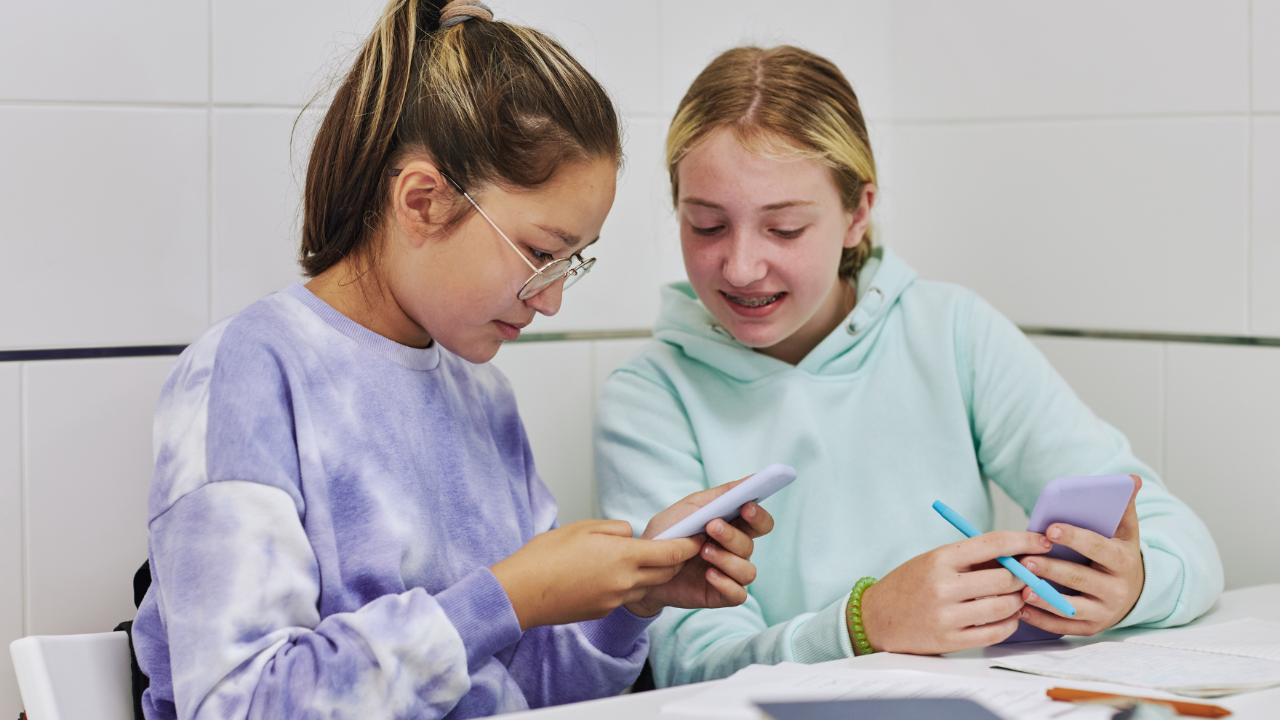
Imagine the last week of May.
A circle of girls sitting together for their 30th session. Some of them arrived in September convinced they were invisible, that high school was going to be four years of performing okayness while something quieter and harder went on underneath. A senior who was terrified to speak in front of people in August is standing at the front of the room, calm and prepared, doing something she genuinely did not know she could do.
No assembly produced this. No poster campaign. No mental health awareness week.
Thirty weeks of showing up. Thirty weeks of being in a room where you were expected to listen and be listened to. Thirty weeks of a consistent older girl who learned your name, remembered what you shared, and came back the following week without fail.
This is what sustained, structured peer mentorship actually looks like at its best. Not a moment, but a slow accumulation of small ones. And the research has a name for what it produces.
What the science calls it
School connectedness. The sense of belonging, of being genuinely cared about within the school community, of mattering to the people around you in a way that is specific and real rather than broadly institutional.
The data on school connectedness is among the most compelling in adolescent wellbeing research. When it is present, rates of poor mental health drop by nearly half. A longitudinal study tracking students from adolescence into their late twenties found that school belonging at ages 15 and 16 predicted lower depression, anxiety, and stress more than a decade later. Effects are stronger for girls than boys. They persist long after the school year ends, long after the program concludes, long after the students have moved on to whatever comes next.
School connectedness is not built in an assembly. It is built in exactly the kind of sustained, relational, weekly structure that a peer mentorship program provides.
What it looks like for the peer leaders
There is a second story running alongside the first one, and it belongs to the senior girls.
The ones who started the year uncertain whether they were really the right person for this, who worried they would say the wrong thing or not know what to do when a conversation got hard. Who learned, over thirty weeks, that they were more capable than they knew. That listening well is a skill and they had it. That a room full of younger girls would follow their lead if they showed up with intention and consistency.
Research on peer mentoring identifies leadership self-efficacy as one of the primary measurable gains for mentors. These students leave high school having led something real. Having developed skills that don't show up on a standardized test but show up everywhere else: in college, in careers, in every relationship they build from here.
A peer mentorship program develops two groups of students at once. That is one of its most underappreciated qualities.
What we have learned in fifteen years
FearlesslyKiND is built on fifteen years of working directly with girls in schools. On 150,000 girls reached. On over 300 and counting schools served. On every lesson learned about what produces real change and what produces the appearance of it.
The honest version of what the research shows is this: effect sizes from peer mentorship programs are modest. This is not magic. No single program fixes a crisis this large or this structural. Anyone telling you otherwise is overselling.
What the research also shows is that those modest effects are consistent across decades of study, that they are strongest when programs are structured and sustained, and that they compound over time into outcomes that matter. A girl who spends a year feeling genuinely known and supported at school carries something forward that no single data point can fully capture.
What FearlesslyKiND is built to do
It is built to scale. To cost schools nothing. To give peer leaders real training and real tools rather than good intentions and an empty room. To bring professional women into the circle once a month, connecting what girls are learning to a world beyond the school building. To track what changes and report it back to schools with data they can actually use.
It is built for the counselors who are stretched past capacity and know exactly what would help if they only had the resources. For the principals who are watching their students struggle and looking for something that addresses the root rather than the symptom. For the senior girls who are already doing this work informally and deserve a structure worthy of what they are capable of.
It doesn't solve everything. No program does. But it solves something, for real, over time, in a way that shows up in how a school feels when May comes around and a circle of girls sits together for the last time and knows, without anyone having to say it, that this year was different.
That is what we are building. And we would love for your school to be part of it.
➡️ Apply for our school waitlist here.
You're one step away from exclusive weekly content in the FearlesslyGiRL Edit.
Join 4500+ subscribers of The FearlesslyGiRL Edit - a weekly newsletter for girls empowerment leaders, coaches mentors, advocates & educators. Fill out the form below and get on the list! New editions every Monday.
We hate SPAM. We will never share or sell your information, for any reason. Unsubscribe any time.