
10 Friendship Skills Every Girl Needs (And How to Teach Them)
Dec 09, 2025
Friendships are one of the most important parts of a girl’s life. They shape her self worth, her confidence, her emotional wellbeing, and even how she sees her place in the world. But despite how central friendships are, most girls have never been taught the actual skills that help them build healthy, supportive, drama free relationships.
As an educator, mentor, or youth leader, you can give girls the tools they need to form friendships that feel good, respectful, and aligned with who they are. These skills not only help girls navigate current friendships, they also carry forward into their teen years and adulthood.
Here are ten essential friendship skills every girl needs, along with simple ways you can teach them.
1. Understanding What Makes a Healthy Friendship
Girls often assume that all friendships are good as long as someone wants to spend time with them. Teaching them what a healthy friendship feels like helps them make wiser choices.
Healthy friendships include:
• kindness
• respect
• trust
• support
• honesty
• shared values
Teaching strategy:
Use group discussion prompts and examples of both healthy and unhealthy qualities. Invite girls to reflect on what feels good and what does not.
2. Communication That Is Clear and Kind
Girls often struggle with speaking up because they fear hurting someone’s feelings. Teaching clear and kind communication helps them express their needs without guilt.
Teaching strategy:
Practice simple scripts like:
• I feel…
• I need…
• I would like…
• Can we talk about…
This builds confidence and reduces misunderstandings.
3. Boundary Setting
Setting boundaries is one of the hardest and most powerful friendship skills for girls. Boundaries protect energy, emotional health, and self worth.
Teaching strategy:
Use scenarios where girls can practice saying:
• I cannot do that today
• I need some space
• That does not feel right to me
• I prefer…
Girls feel stronger when they know how to protect their limits.
4. Emotional Awareness
Most friendship drama begins with emotions girls do not yet understand. Emotional awareness helps them pause, reflect, and respond instead of react.
Teaching strategy:
Use simple reflection prompts:
• What am I feeling
• What triggered this
• What do I need right now
This builds emotional intelligence and reduces conflict.
5. Handling Conflict in a Healthy Way
Conflict is a normal part of all relationships, but many girls fear it. When they avoid conflict, problems build and drama grows.
Teaching strategy:
Model and practice conflict repair steps like:
• listening
• expressing feelings
• acknowledging impact
• finding a solution
Girls learn that conflict can strengthen friendships when handled with care.
6. Recognizing Red Flags
Girls often stay in unhealthy friendships because they do not recognize warning signs early on.
Red flags include:
• gossip
• competition
• manipulation
• exclusion
• mean jokes
• lack of respect
Teaching strategy:
Use worksheets or role play to help girls spot red flags and choose healthier connections.
7. Practicing Inclusion
Inclusivity helps girls build empathy and reduces social isolation. It also strengthens group culture and emotional safety.
Teaching strategy:
Create activities where girls:
• invite someone new
• pair with different partners
• practice welcoming behaviors
• notice who might feel left out
Inclusivity builds kindness and confidence.
8. Self Worth and Identity Awareness
Girls with stronger self worth make better friendship choices. They are less likely to tolerate mistreatment or stay in friendships that drain them.
Teaching strategy:
Use activities that focus on strengths, values, and identity. When girls understand who they are, they choose friends who reflect and respect that.
9. Repairing Friendships After Hurt Feelings
Most girls either shut down or walk away when conflict happens. Teaching them how to repair strengthens emotional maturity.
Teaching strategy:
Practice simple repair tools like:
• apologizing sincerely
• taking responsibility
• clarifying intentions
• rebuilding trust
These skills help girls maintain healthier long term friendships.
10. Knowing When to Walk Away
Not all friendships are meant to last forever. Teaching girls that it is okay to let go of unhealthy connections is one of the greatest gifts you can give them.
Teaching strategy:
Help girls reflect on questions like:
• Does this friendship feel good
• Do I feel respected
• Do I feel like myself
• Is this relationship balanced
Letting go becomes much easier when girls understand it is an act of self respect.
Want These Skills Already Built Into a Complete Friendship Program?
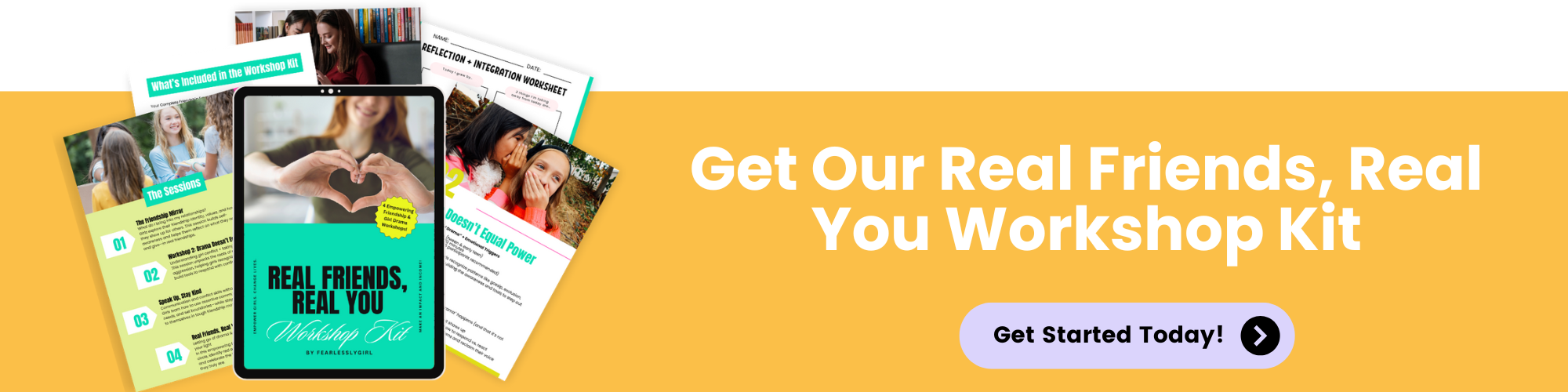
Teaching all of these skills takes planning. That is why I created the Real Friends, Real You Workshop Kit, a complete four part friendship and emotional wellness series for girls.
Inside you will find:
• step by step facilitator guidance
• ready to use worksheets
• beautifully designed printables
• partner and group activities
• communication scripts
• boundary setting practice
• reflection tools
• friendship values work
• emotional regulation tools
• discussion questions
• full session outlines
This kit makes it easy to lead meaningful workshops in:
• schools
• after school programs
• community groups
• mentoring circles
• girls clubs
• workshops and retreats
You can help girls build healthy, drama free friendships with confidence and ease.
You can explore and download the Real Friends, Real You Workshop Kit instantly here.
You're one step away from exclusive weekly content in the FearlesslyGiRL Edit.
Join 4500+ subscribers of The FearlesslyGiRL Edit - a weekly newsletter for girls empowerment leaders, coaches mentors, advocates & educators. Fill out the form below and get on the list! New editions every Monday.
We hate SPAM. We will never share or sell your information, for any reason. Unsubscribe any time.