
Why Girls Struggle With Friendship in the Tween and Early Teen Years (And What You Can Do to Help)
Dec 09, 2025
If you work with tween or early teen girls, you have likely seen how messy, emotional, and confusing friendships can become during this stage. One moment girls are inseparable, and the next they are dealing with drama, hurt feelings, exclusion, or sudden shifts in friend groups. Many educators and mentors describe this age as “friendship turbulence” because everything feels so intense and unpredictable.
The truth is that friendship struggles in the tween and early teen years are normal. They are part of a major developmental stage where girls are learning who they are and how relationships work. Understanding why this happens helps you support girls with compassion, empathy, and confidence.
Here is why friendship becomes so difficult during these years and how you can help girls navigate it in a healthier way.
1. Girls Are Figuring Out Their Identity
The tween and teen years are filled with questions like:
• Who am I
• What do I believe
• What matters to me
• Who do I want to be friends with
• How do I want to show up
As identity develops, friendships shift. Girls may feel torn between who they used to be and who they are becoming. This tension can cause confusion, insecurity, or sudden changes in friend groups.
How you can help:
Use reflection activities to help girls understand their values, strengths, and friendship needs. When they know themselves, they choose friends who reflect their worth.
2. Emotions Are Bigger and Harder to Manage
Friendship drama often comes from emotions that feel overwhelming. Girls are experiencing rapid changes in their brain and hormones, which affects:
• impulse control
• emotional regulation
• self awareness
• sensitivity
• communication
This can lead to misunderstandings, overreactions, and conflict.
How you can help:
Teach emotional awareness and regulation tools. Simple breathing, grounding, and reflection exercises can reduce drama and increase self control.
3. Social Comparison Intensifies
Around this age, girls become more aware of:
• popularity
• appearance
• social status
• who is friends with who
• who is left out
This social awareness can create insecurity, jealousy, and pressure to fit in. Girls may change their behavior or friendships based on comparison instead of true connection.
How you can help:
Encourage conversations about values and authentic friendships. Help girls understand that their worth is not based on where they fit socially.
4. Communication Skills Are Still Developing
Girls often interpret situations emotionally rather than logically. They may:
• avoid hard conversations
• rely on indirect communication
• expect others to “just know” what they feel
• jump to conclusions
• talk to others instead of talking to the person involved
All of this leads to misunderstandings and conflict.
How you can help:
Teach clear communication and conflict repair. Give girls scripts and practice scenarios so they feel more confident expressing themselves.
5. Inclusion and Exclusion Become More Powerful
Friend groups become tighter during this stage, and leaving someone out becomes more noticeable and painful. Exclusion is often not intentional, but girls can feel deeply hurt when it happens.
How you can help:
Create group culture around inclusion, kindness, and empathy. Teach girls how to welcome others and how to navigate group dynamics with compassion.
6. Girls Fear Losing Friends or Being Alone
Even when a friendship feels unhealthy, girls may stay because they fear:
• losing their place
• being left out
• being judged
• not having anyone else
This fear can keep them locked in relationships that hurt their self worth.
How you can help:
Teach self worth and boundaries. Help girls understand that they deserve friendships that feel safe, kind, and supportive.
7. Friendships Are Their Emotional Safe Space
During the tween and early teen years, friendships are incredibly important. Girls often rely on friends for:
• validation
• comfort
• identity
• shared experiences
• emotional support
Because friendships matter so much, the highs feel very high and the lows feel very low.
How you can help:
Give girls tools to manage the emotional ups and downs with more stability and confidence.
How You Can Support Girls Through Friendship Challenges
Girls need more than advice. They need:
• guidance
• emotional tools
• communication skills
• space to share honestly
• activities that build confidence
• reflection time
• opportunities to practice healthy connection
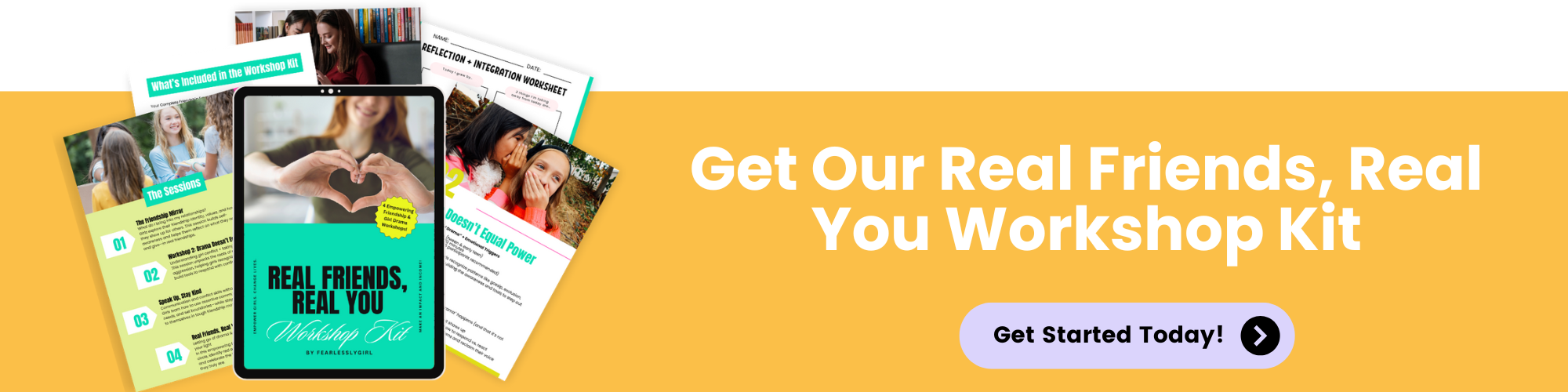
This is exactly why the Real Friends, Real You Workshop Kit was created.
A Ready to Use Friendship and Emotional Wellness Program
The Real Friends, Real You Workshop Kit gives you everything you need to lead a powerful four part friendship workshop, including:
• step by step facilitator guidance
• group discussion prompts
• beautifully designed worksheets
• reflection and journaling tools
• activities that teach boundaries
• communication scripts
• emotional awareness exercises
• friendship values mapping
• partner activities
• a complete program structure
You can use this kit in:
• schools
• after school clubs
• mentorship circles
• community groups
• workshops and retreats
When girls learn these skills, friendships become healthier, drama decreases, and their confidence grows.
You can explore and download the Real Friends, Real You Workshop Kit instantly here.
You're one step away from exclusive weekly content in the FearlesslyGiRL Edit.
Join 4500+ subscribers of The FearlesslyGiRL Edit - a weekly newsletter for girls empowerment leaders, coaches mentors, advocates & educators. Fill out the form below and get on the list! New editions every Monday.
We hate SPAM. We will never share or sell your information, for any reason. Unsubscribe any time.